The Gentleman’s Atelier Men’s Formal Trousers

+91 83693 81345optionsclothingmumbai@gmail.com

Options Mall logo Visit the House

Pattern Book II — The Measurement Chart

Fits & Silhouettes.

A trouser is a series of measurements in conversation with each other. Change one — the rise, the thigh, the opening — and the whole silhouette shifts. This chart names each point a tailor considers, so you can see fit as clearly as a cutter does.

  1. Waist measurement

    Taken around the waistband. It should close comfortably without a belt doing the work.

  2. Rise

    Waistband to crotch seam. Higher rises sit at the natural waist; lower rises sit on the hips.

  3. Hip fit

    Room across the seat. Too little pulls pockets open; too much creates sagging folds.

  4. Thigh room

    Ease through the upper leg so you can sit, climb stairs and stride without strain.

  5. Knee position

    Where the leg begins to taper or straighten — it decides the shape of the lower leg.

  6. Leg opening

    Width at the hem. It should balance the shoe: narrower for sleek shoes, wider for sturdier ones.

  7. Trouser length

    Measured along the outside leg; it determines how the hem meets the shoe.

  8. Break

    The fold formed where the hem rests on the shoe — none, slight, half or full.

  9. Overall proportions

    How all of the above relate to your height, build, jacket length and footwear.

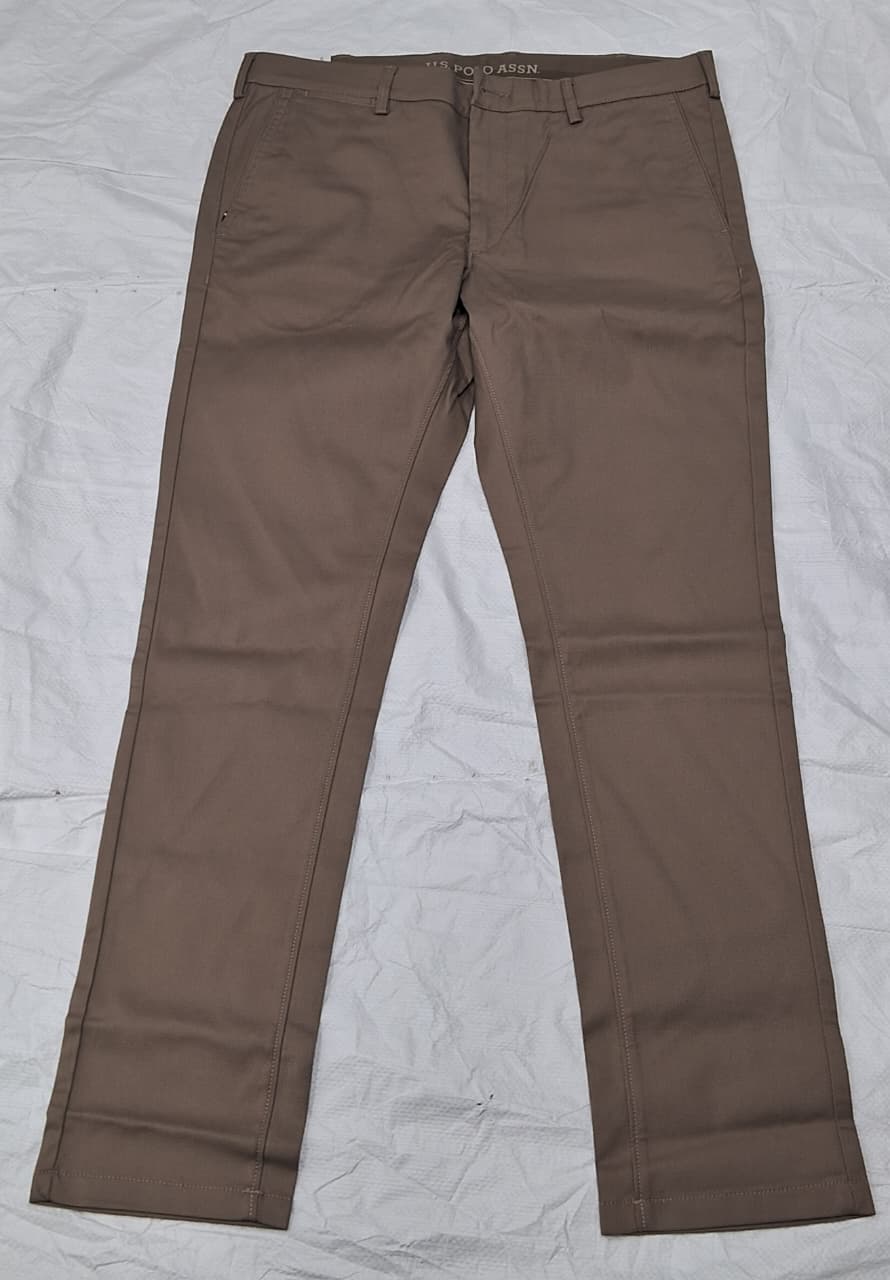
Brown formal trousers laid flat with numbered tailoring measurement lines for waist, rise, hip, thigh, knee, leg opening and length
Chart Points 1–7 measured flat; 8–9 judged when worn. Diagram, not to scale.

The Five Silhouettes

Five ways to draw a leg.

Each silhouette below is shown worn or laid flat, beside its pattern outline. The scales are descriptive — they compare fits with one another rather than quote measurements, which always vary by maker and size.

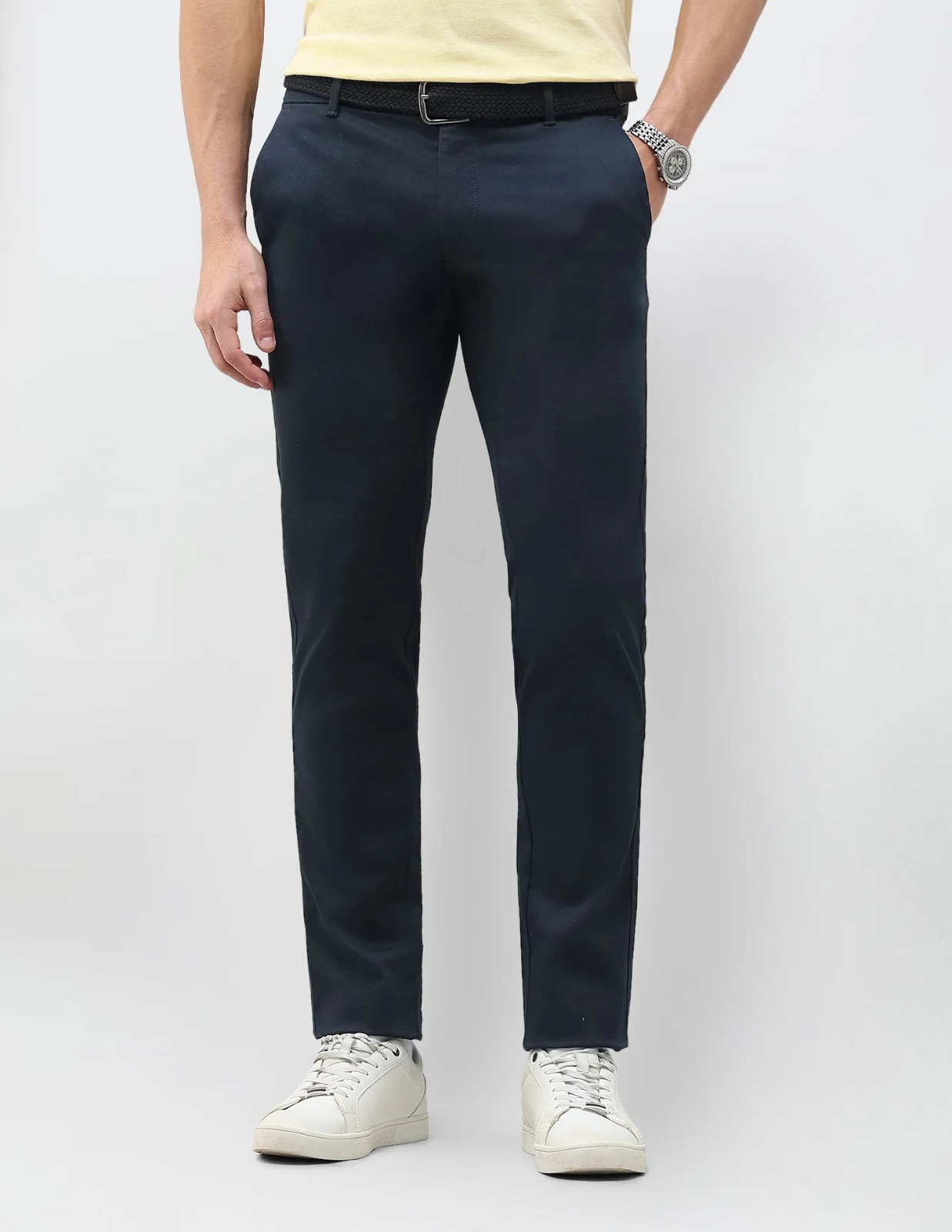
Man wearing navy slim fit formal pants with a pale yellow T-shirt, belt and white sneakers
i. Navy, slim.

Slim Fit

A more defined silhouette with a closer-fitting leg. The slim fit removes excess cloth from the thigh, knee and hem to create a sharp, modern line. It flatters lean and average frames and looks particularly crisp with shorter jackets and sleek footwear.

Proportion note: a slim leg makes the shoe appear larger, so balance it with refined loafers or slim Derbies rather than chunky soles. Men with muscular thighs may find a tapered fit gives the same clean finish with more comfort.

Thigh roomCloseGenerous
Leg openingNarrowWide
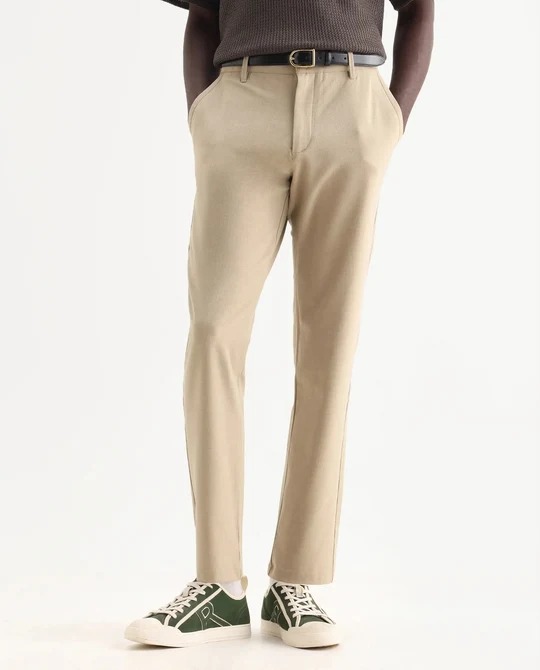
Man wearing beige regular fit trousers with a dark shirt, belt and canvas sneakers
ii. Beige, regular.

Regular Fit

A balanced silhouette providing moderate room. The regular fit allows natural movement through the seat and thigh while keeping a tidy, straight-falling leg. It is the most forgiving fit across body types and the most comfortable for long hours seated.

Proportion note: regular fits pair naturally with most formal shoes, from Oxfords to brogues. On slimmer men, check that the leg does not look wide at the hem; a slight taper can help.

Thigh roomCloseGenerous
Leg openingNarrowWide
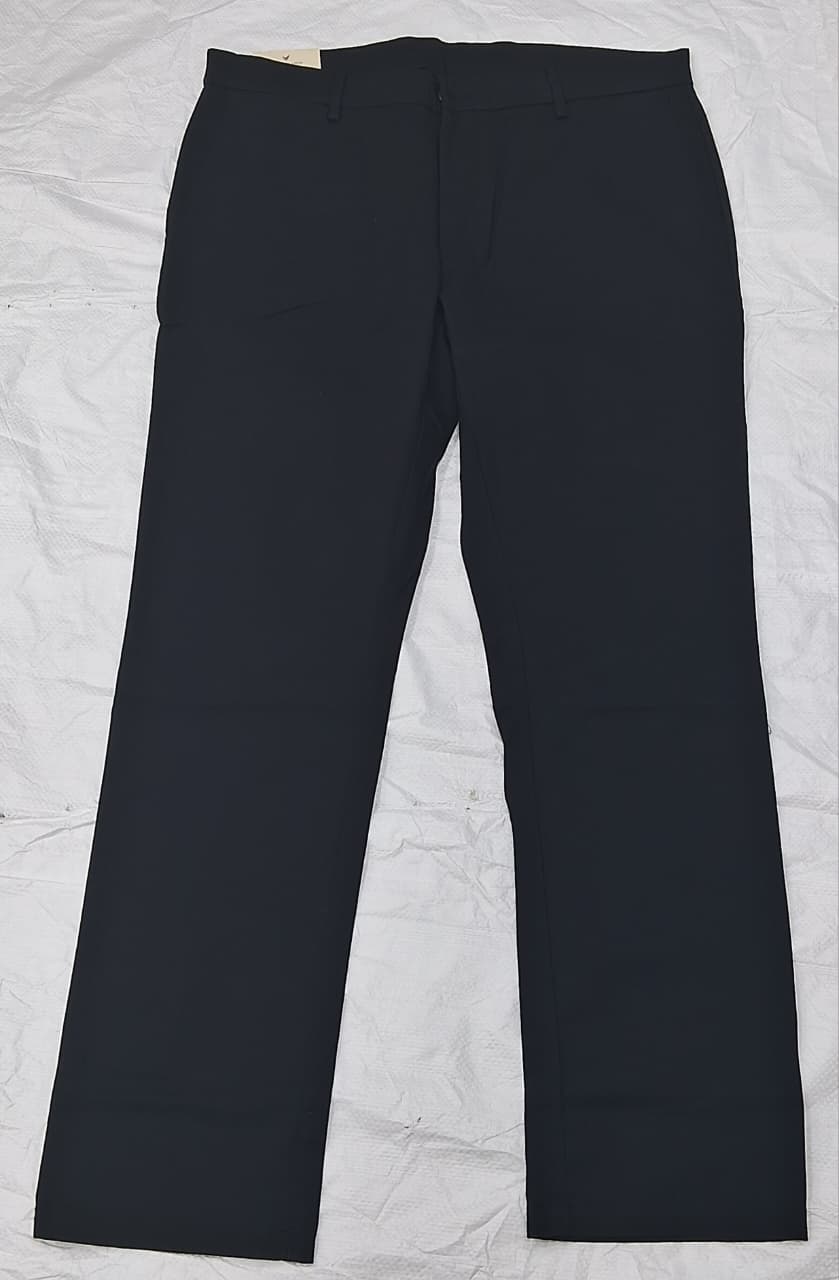
Navy straight fit formal trousers laid flat, showing an even width from knee to hem
iii. Navy, straight.

Straight Fit

A consistent leg width through the lower portion. From the knee down, a straight-fit trouser neither narrows nor flares, producing a continuous vertical column. This lengthens the leg and balances broader shoulders and longer jackets.

Proportion note: straight legs sit beautifully over substantial shoes — cap-toe Oxfords, brogues and monk straps — and favour a slight to half break.

Thigh roomCloseGenerous
Leg openingNarrowWide
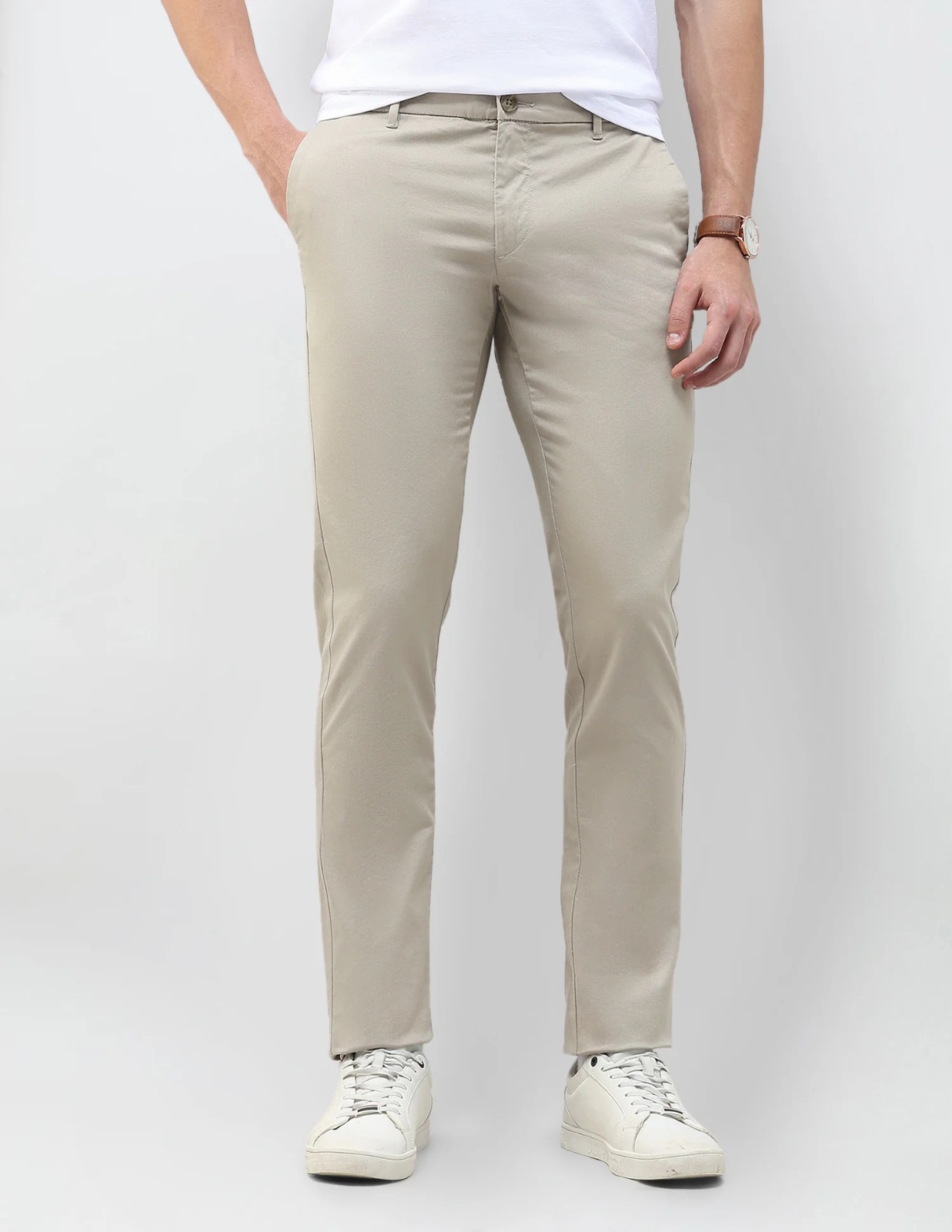
Man wearing beige tapered fit trousers narrowing to the ankle, with a white T-shirt and white sneakers
iv. Beige, tapered.

Tapered Fit

A silhouette that gradually narrows towards the ankle. Tapered trousers give comfortable room at the hip and thigh and then draw in steadily, finishing neatly above the shoe. It is an ideal compromise for men who want a modern line without a tight upper leg.

Proportion note: the taper keeps fabric from pooling, which helps shorter men. Finish with little or no break and pair with loafers, Derbies or clean leather sneakers.

Thigh roomCloseGenerous
Leg openingNarrowWide
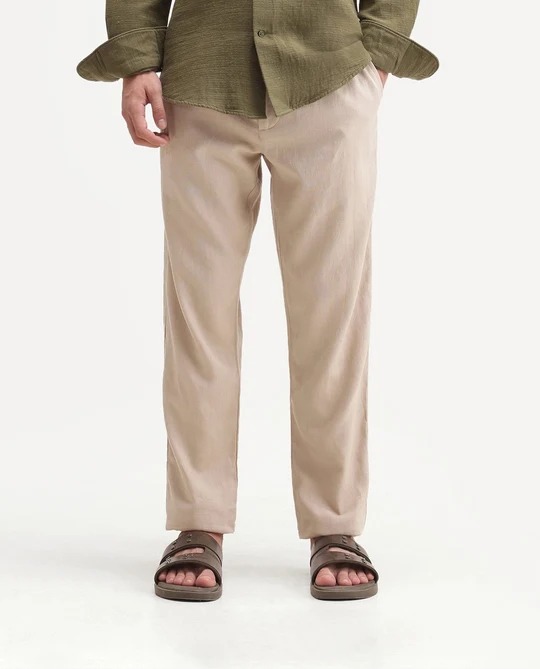
Man wearing beige classic relaxed fit trousers with an olive check shirt and leather sandals
v. Beige, relaxed proportion.

Classic Fit

A traditional cut with a more relaxed overall proportion. Classic fits offer the most room through the seat, thigh and leg, often with a higher rise. They drape with a gentle fullness that feels comfortable and looks dignified, especially in fluid cloths.

Proportion note: classic fits suit larger and taller frames and pair with fuller shoes. A half break keeps the extra width looking intentional rather than oversized.

Thigh roomCloseGenerous
Leg openingNarrowWide

Where Trouser Meets Shoe

The four breaks.

The break is the soft fold that forms when the hem rests on the shoe. It is the last centimetre of a trouser, and often the most visible.

  • No break

    The hem just kisses the top of the shoe. Crisp, modern, ideal for slim and tapered fits.

  • Slight break

    One gentle fold at the front. The most versatile choice for office and formal wear.

  • Half break

    A deeper, clearly visible fold. Traditional and dignified, suited to straight and classic legs.

  • Full break

    Generous folds resting on the shoe. Conservative and relaxed; can look heavy on shorter men.

Proportion & the Body

Fit the man, not the label.

No silhouette is universally “best”. The right fit depends on the proportions of the person wearing it, and on what he wants the trouser to do.

Taller men

Straight, regular and classic fits carry length gracefully. A half break or slight break avoids the impression of trousers that are too short.

Shorter men

Slim or tapered legs with no break or a slight break, ideally in the same tone as the shoes, keep the line long and uninterrupted. A mid to higher rise also lengthens the leg.

Broader or athletic builds

Regular or tapered fits allow room through the thigh while keeping the lower leg neat. Overly slim trousers exaggerate the upper body by contrast.

Slimmer builds

Slim and straight fits prevent excess fabric from swamping the frame. Textured cloths can add welcome visual weight.

Proportion & the Shoe

Footwear finishes the line.

The leg opening and break should always be decided with the shoes in mind — ideally by trying trousers on while wearing the shoes you plan to wear with them.

Oxfords & brogues

Substantial and formal. They suit straight and regular legs with a slight or half break.

Loafers

Low-profile and elegant. They pair best with slim or tapered trousers and little or no break, so the shoe’s shape remains visible.

Derbies & monk straps

Versatile middle ground — comfortable with most fits and breaks.

Minimal leather sneakers

For business-casual days only; keep trousers trim and cropped to no break.

Continue the fitting

From proportion to construction.

Fit is only as good as the construction that holds it. Discover how waistbands, seams, pockets and hems shape the final silhouette.